Practical Ecology

Nature Switched On


in the Pyrenees

introduction
floristic catalogue
faunistic catalogue
contact
index
resources
photo gallery
map
 

First entry:
   2006 Aug 1

Latest entry:
  
2011 Dec 11  


                    a   S T A M M E R  project (news)             

Introduction


This is the continuing story, more or less in the form of a logbook, of a terrain (12.000 m2) we bought in the Spanish Pre-Pyrenees in the summer of 2006. The terrain is located at around 650m on the slope of a hill, consisting of 3 or 4 terraces of limestone grasslands lined by hedges of almond trees, brambles and dogwood (to name just a few). The hillside is facing north, compensating a little bit for the poor rainfall in this zone (550mm) and offering beautiful views on the highest peaks of the Pyrenean mountain range. The terrain is surrounded by a cereal field (north, almond orchards (west and east) and a beautiful Mediterranean forest (south) with Quercus and Juniperus species (see Map).


WWW   NSO


An overview of the terrain, looking west.
26 Nov.2006 10:52

Looking north-east
9 Dec. 2006 8:50


___________

Our plan is to build our own house there in the near future, but we are of course equally committed to the terrain and its surroundings.

When discussing our plans and philosophy we have to make one thing clear: the terrain is already a botanical garden. It has been left  untouched for at least a decade creating the astonishing species abundancy of dry and poor chalk grasslands (of the FESTUCO-BROMETEA class; see the floristic catalogue)


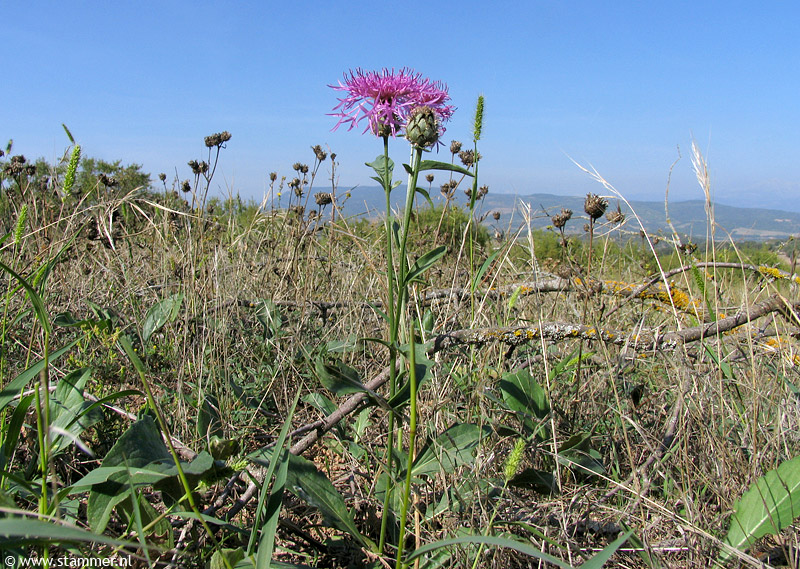
Centaurea scabiosa, a characteristic species of the FESTUCO-BROMETEA class, grows here abundantly.
19 Sept. 2006 15:22


______________

A major inspiration and influence on my ideas about gardening and landscape architecture is Louis G. Le Roy. He puts the emphasis on the process not on the result. In this process of the development of a garden or landscape the influence of the human being should be very modest, equally important is his role as a passive observer and appreciator. In nature (as in life) everything flows and instead of wanting a fixed situation to continue (with a lot of effort like in a traditional ornamental garden) we must let nature go its own way, finding its own solutions in the succession from one stage to another. According to Le Roy the human factor can nevertheless play an important role, especially in the speed of the succession, creating different habitats, planting, sowing and creating in this way the species richness typical for mature succession stages.


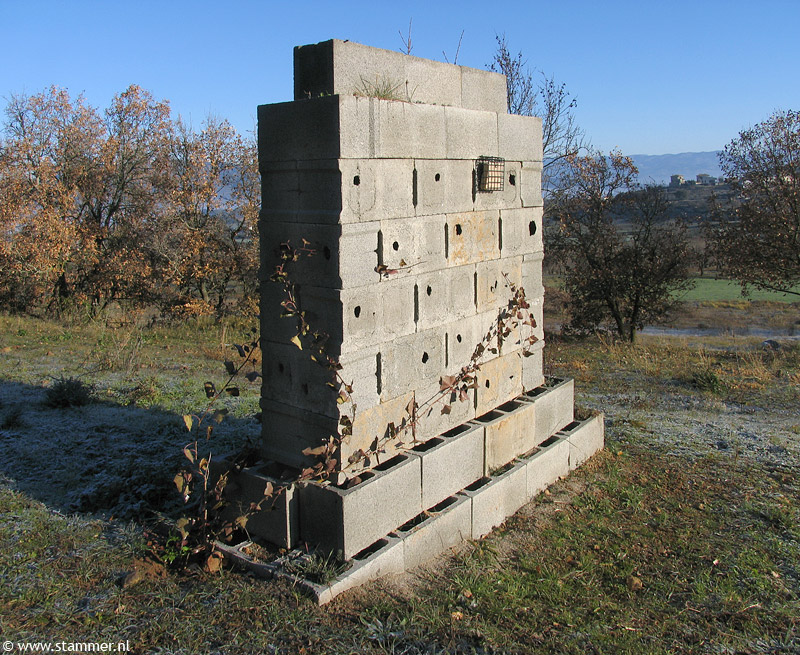
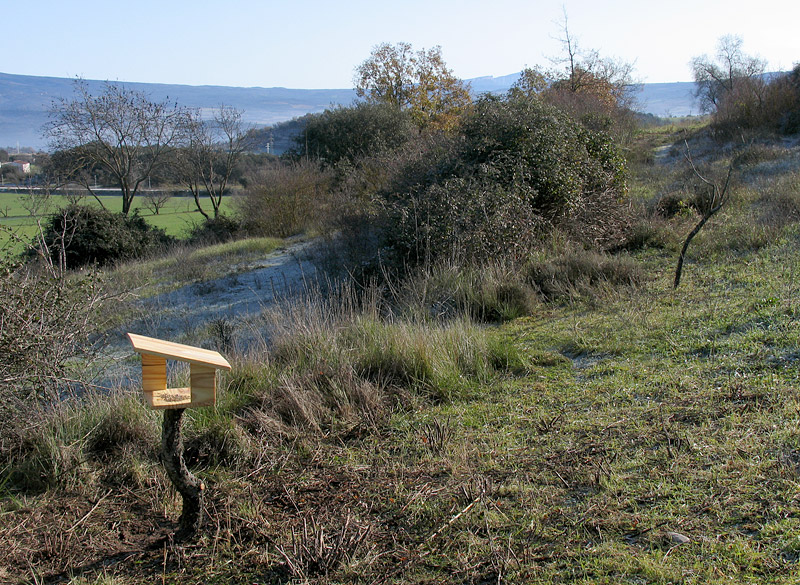
A "biowall" inspired by Le Roy, offering opportunities for nesting, hiding,  feeding and supporting.
 I planted Hedera helix and Clematis vitalba at the foot.
7 Jan. 2007 9:58


______________

For more information about Le Roy and his ideas, have a look here: www.stichtingtijd.nl (in different languages). The title for this website (Nature Switched On) was partly taken from one of his first and most important books: Natuur uitschakelen - Natuur inschakelen (Switch Nature On or Off).
Very interesting is his EcoKathedraal project started 30 years ago on 4 ha of grassland in the north of the Netherlands. Piling up debris of bricks and concrete, he has created a rich ecosystem which is surprisingly esthetic at the same time, in my opinion at a much higher level than the traditional ornamental garden with its overkill of colours and forms. Judge for yourself and visit the photo gallery here: www.ecokathedraal.nl or my personal series of photographs.

Of course we are not going to copy Le Roy's project recklessly on my terrain. There are important differences in the local situation (a much higher autochthonous species abundancy, a dry climate) and I am perhaps a little bit more inclined to guide and steer the system for pure esthetical and practical reasons, given the fact that we want to make our home here.

 
  The centre of the terrain.
1 Oct 2006 15:25
 

______________

So we have proposed ourselves the following guidelines:

  • No elaborate plans with dead-lines and the fixation on results

  • Appreciation of and interaction with the present state, favouring improvisation and imagination

  • Protecting the soil (no ploughing or weeding, and covering when necessary)

  • Enriching the vegetation and animal life with planting and sowing of native species and the introduction of elements like ponds, nesting boxes, stone walls etc.

  • Guiding and adjusting part of the vegetation by pruning and mowing, controlling aggressive species like brambles, favouring other species and improving aesthetic qualities.

  • Introducing the human factor. The human being is a biological species like any other and can and will alter their environment. The human influence can be harmful but with some care may also result beneficial for the ecosystem. So our future house will "eat" part of the terrain but special features (green roof, compost toilet) will have enriching effects.

 
  Looking south-east.
25 Dec 2006 11:25.
 

______________

The visual aspect of this website is very prominent while I will keep the text quite short. Images say so much with so little effort. All the photographs presented here are taken in or from the terrain and on the corresponding date, if not stated otherwise.
When you click on a thumbnail image you will get a bigger image in a new window.

Almost all  photographs were taken with a Canon Powershot Pro1 camera with 8 megapixels.

In the menu at the top and bottom left corner you can navigate through this site. The 'Introduction' is what you are reading now, the 'Contact' button will give you the opportunity to get in touch with us via e-mail, the 'Map' refers to an image of the terrain with the main features. The first button with a date cycles the diary forwards, the button below cycles it backwards. The 'Floristic catalogue' refers to a list of botanical species (in 4 languages) found on the terrain, with photographs taken on different dates and (in the future) some information about abundance and distribution. Remember that navigating through this site goes normally within the same window with the exception of links to photographs which open in a new window.

Being a kind of logbook or weblog, these pages will help to experience the project as a real process, a voyage without end. We hope you will enjoy it and that it will stimulate you to switch on nature in your own garden (or life) and perhaps also to interact with this project. Feel free to offer your suggestions, ideas and questions.

A version in Spanish can be read here.

Blanca Sanchez & Andreas Brons


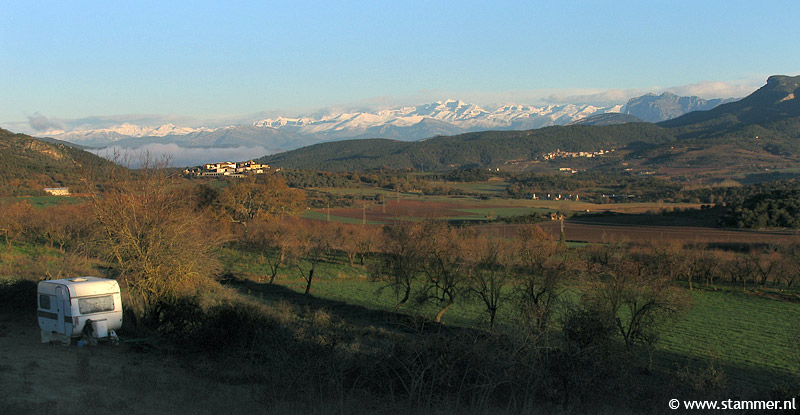
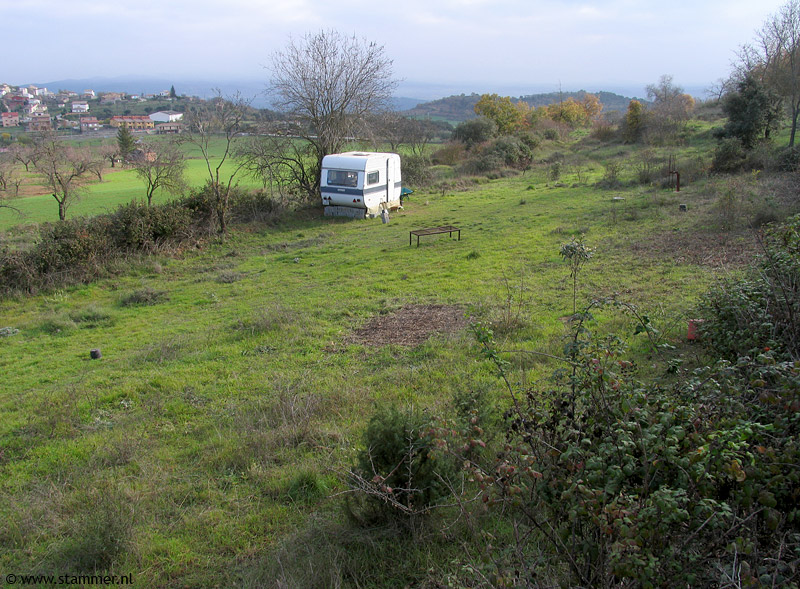
Looking south-east. The caravan is for the moment our weekend home.
3 Dec.2006 10:42.


introduction
floristic catalogue
faunistic catalogue
contact
index
resources
photo gallery
map

First entry:
   2006 Aug 1

Latest entry:
  
2011 Dec 11  


Tuinen Webring is een iniatief van de Tuinkrant. 
Sluit je ook aan bij deze tuinen webring.

Tuinen Webring, een iniatief van de Tuinkrant

DOE MEE!

Vorige Volgende Willekeurig Lijst


Latest revision on:  03/02/2012